
Published on May 13, 2026
For WordPress site owners and WooCommerce stores
WordPress Plugin to Make Email Marketing Easier: Why MailCannon Is Worth a Look
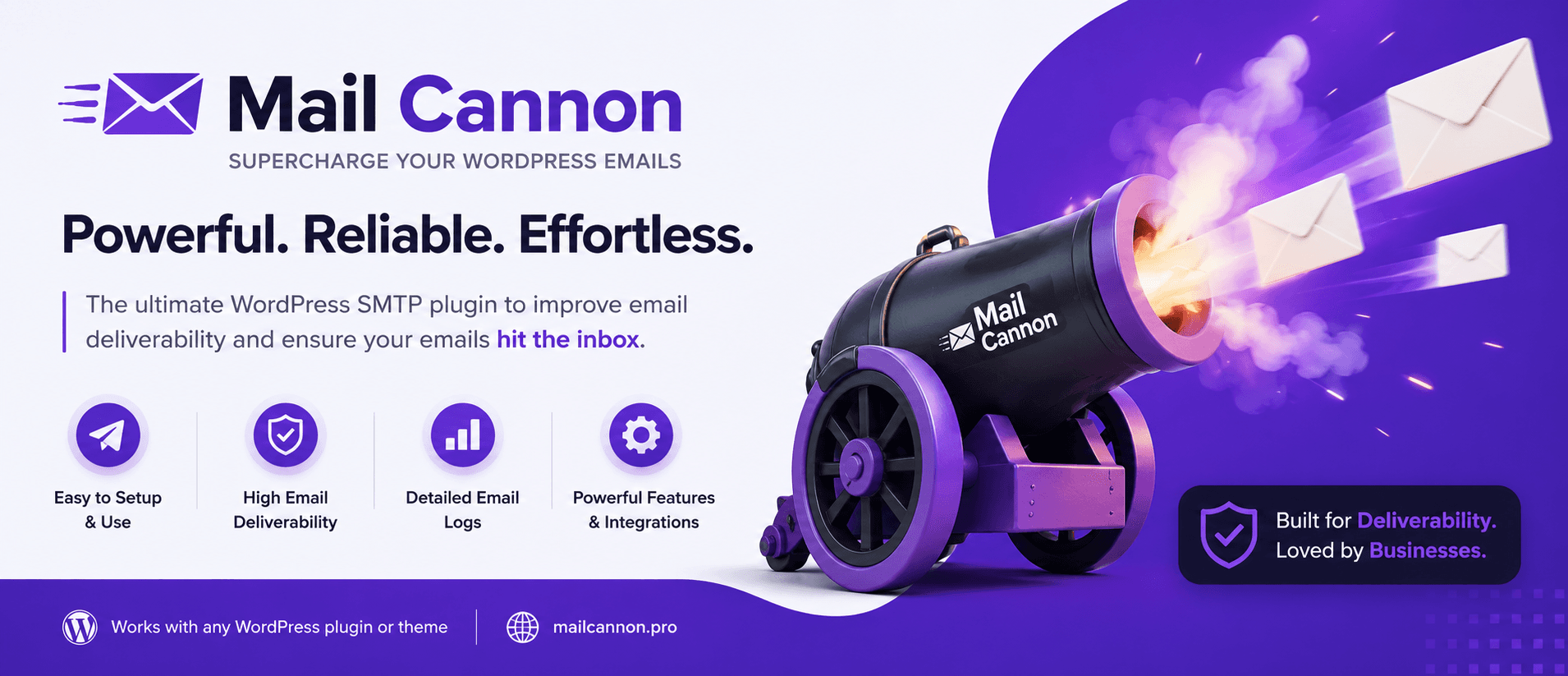
If you are looking for a WordPress email marketing plugin that helps you send campaigns from your WordPress admin without juggling a messy workflow, MailCannon is built for that use case. It connects your site to the MailCannon platform so you can select campaigns, target WordPress users or WooCommerce customers, and launch sends from a familiar dashboard.
Quick answer
MailCannon is not trying to be a generic form plugin or a basic newsletter widget. It is a workflow-first email marketing plugin for WordPress that connects your site to the MailCannon SaaS platform. That means you keep campaign creation, contact management, analytics, and sending infrastructure in MailCannon, while WordPress becomes the control point for choosing recipients and launching campaigns to your existing site audience.
For many WordPress site owners, that is the sweet spot. You do not want to manage complex sending logic directly inside your WordPress database, but you also do not want to export CSV files every time you want to email customers, members, or store buyers. MailCannon closes that gap.
Best for
- WordPress businesses with an owned audience
- WooCommerce stores sending campaigns to customers
- Site owners who want a dashboard-driven workflow
Primary keyword focus
This article targets WordPress email marketing plugin plus long-tail terms around newsletters, WooCommerce campaigns, and sending emails from the WordPress admin.
Why WordPress site owners need a better email workflow
A lot of WordPress email setups break down for the same reason: too many disconnected steps. You collect users in one place, manage campaigns somewhere else, export lists manually, and then worry about whether the right people were targeted. That process wastes time and creates mistakes.
A strong email marketing plugin for WordPress should do three things well:
- Connect cleanly with your WordPress audience data.
- Reduce manual steps between campaign planning and sending.
- Keep professional sending, analytics, and deliverability outside fragile WordPress mail defaults.
That is exactly the angle MailCannon takes. Instead of turning WordPress into a full email platform, it connects WordPress to a dedicated campaign platform. For site owners, that often leads to a simpler setup and a more scalable workflow.
What the MailCannon plugin actually does
Based on the official WordPress.org plugin page, the MailCannon plugin connects your WordPress site to the MailCannon platform using an API key. From there, you can fetch campaigns from your MailCannon account, select WordPress users as recipients, include WooCommerce customers when WooCommerce is installed, and send bulk campaigns directly from the WordPress admin.
One detail matters here: the plugin does not manage contacts inside WordPress. Contacts are managed in the MailCannon dashboard, and when you send a campaign from WordPress, the platform can create the contact automatically in your MailCannon account if it does not already exist. That separation is useful if you want WordPress to stay lean while MailCannon handles contact organization, tracking, and sending logic.
Why this setup is practical
Your WordPress site stays focused on users, content, and store activity, while MailCannon handles campaigns, audience syncing, analytics, and sending infrastructure.
Core features that make MailCannon interesting
The MailCannon website highlights several platform capabilities that matter for real email marketing work: bulk campaigns, contact management, AI contact scraping, analytics, custom SMTP, and real-time processing. In practice, those features matter because they support the entire campaign lifecycle instead of solving only one narrow part of it.
| Capability | Why it matters |
|---|---|
| Campaign selection in WordPress | Lets admins launch campaigns from a familiar workflow instead of exporting lists manually. |
| WordPress users as recipients | Useful for membership sites, communities, content publishers, and product businesses. |
| WooCommerce customer targeting | Helps stores turn customer data into repeat-purchase and re-engagement campaigns. |
| Automatic contact creation | Reduces friction between your site audience and your MailCannon contact database. |
| Analytics and tracking | Gives you visibility into campaign performance instead of guessing what worked. |
| Custom SMTP support in MailCannon | Gives advanced users more control over sender reputation and delivery setup. |
How the workflow works inside WordPress
The official plugin setup is straightforward. You install the plugin, open MailCannon > Settings, paste your API key, test the connection, and then fetch campaigns from your MailCannon account. After that, you can move to the send screen, choose a campaign, select recipients, and start sending.
- Install the plugin from WordPress.org and activate it.
- Connect your site with the MailCannon API key from your account settings.
- Fetch campaigns that already exist in your MailCannon dashboard.
- Select WordPress users or WooCommerce customers as recipients.
- Send the campaign from WordPress while MailCannon handles delivery and reporting.
For non-technical site owners, that matters because it reduces setup anxiety. For agencies and store operators, it matters because it shortens the path from “we need to send an email” to “campaign launched.”
Why WooCommerce support is a big selling point
Many WordPress email plugins sound good in general but feel weak for ecommerce. WooCommerce changes the picture because your email strategy is no longer just about newsletters. It is about product announcements, repeat-purchase reminders, seasonal campaigns, order-related follow-ups, and audience segmentation around real buying behavior.
MailCannon’s WooCommerce angle is practical because it allows WordPress admins to select WooCommerce customers as recipients when the store plugin is present. That means your store data is not trapped in the shop backend. It becomes a campaign asset. For ecommerce teams, that alone can justify choosing a dedicated WordPress plugin for email marketing over a generic newsletter-only setup.
Who should use MailCannon
MailCannon is a good fit if your business already runs on WordPress and you want the email workflow to start from the site you manage every day. That includes:
- Small business websites that want a cleaner campaign workflow without piecing together several plugins.
- WooCommerce stores that want to target real customers from the admin dashboard.
- Content sites and membership sites that already have a WordPress user base.
- Agencies that need a repeatable setup across multiple client sites.
If your top priority is managing every subscriber record inside WordPress itself, then this plugin may not be the model you want, because it is intentionally built around the MailCannon platform. But if your goal is smoother sending, cleaner audience access, and better separation between CMS and campaign infrastructure, that architecture is a strength.
Best practices for better results
Installing a WordPress email marketing plugin is only the first step. To get real value from it, use a workflow that keeps your campaigns relevant and measurable:
- Segment recipients instead of blasting the same message to everyone.
- Use WooCommerce customer groups for offers tied to actual buying behavior.
- Keep campaign creation inside MailCannon organized before sending from WordPress.
- Review analytics regularly so you improve future subject lines, offers, and targeting.
- Document your sending process if multiple admins or marketers touch the account.
If you want to evaluate more tools first, the internal plugins page is a useful starting point. If you want broader product updates and launch articles, you can also browse the blog.
How MailCannon differs from a typical newsletter plugin
When people search for a WordPress plugin to make email marketing easier, they often expect one of two models. The first model is a form-first plugin that mainly helps capture subscribers. The second model is a self-contained newsletter system that tries to do everything inside WordPress. MailCannon sits in a slightly different category.
It behaves more like a WordPress bridge into a dedicated email marketing platform. That distinction matters. A form-first plugin can be excellent for list building but weak for campaign execution. A fully self-hosted newsletter plugin can be convenient, but some teams eventually outgrow the setup once analytics, deliverability, or audience operations become more advanced. MailCannon’s model says: keep campaign operations where they belong, then make WordPress a clean launch surface.
For site owners, that means the plugin is less about “designing every email inside WordPress” and more about “using WordPress to activate the right campaign for the right audience.” That is a valuable difference if you already see email as part of a broader sales or retention system rather than a side feature.
Installation and launch checklist
If you want to go from research to execution quickly, use this simple checklist before your first send:
- Install the plugin from WordPress.org and confirm it activates cleanly.
- Create or review your campaign inside MailCannon before opening the WordPress send screen.
- Copy the API key from the MailCannon settings area and test the connection.
- Double-check your target audience: WordPress users, WooCommerce customers, or both.
- Run a small internal send first to validate subject line, content, and tracking.
- Launch the full campaign only after you confirm the first workflow behaves as expected.
This kind of checklist matters because good email marketing is operational, not just creative. Many campaign problems happen before the email ever goes out: wrong audience, disconnected API keys, outdated campaign content, or lack of a testing step. MailCannon’s plugin setup is simple enough that building a repeatable internal process around it should not be difficult.
Useful links and documentation
If you want to validate the product details or get started right away, these are the most useful official resources:
- MailCannon on WordPress.org for installation, changelog, and feature summary.
- MailCannon website for platform overview, pricing, and main product features.
- MailCannon documentation for API and implementation details.
FAQ
Is MailCannon a WordPress email marketing plugin or a separate SaaS?
It is both. The WordPress plugin connects your site to the MailCannon SaaS platform, where campaigns, analytics, and contact management live.
Does the plugin store and manage contacts inside WordPress?
No. The official plugin description states that contacts are managed in the MailCannon dashboard, not in WordPress itself.
Can I send campaigns to WooCommerce customers?
Yes. When WooCommerce is installed, the plugin can use WooCommerce customers as campaign recipients from the WordPress admin.
Where do I get the API key for setup?
You can get it from your MailCannon account settings, then paste it into the plugin settings screen in WordPress.
Conclusion
If you want a WordPress email marketing plugin that helps you launch campaigns faster from the dashboard you already use, MailCannon is a strong option. Its value comes from combining WordPress-side recipient access with a dedicated external campaign platform, instead of forcing your CMS to do everything.
For WordPress site owners, especially WooCommerce stores, that can mean less manual work, fewer moving parts, and a more reliable email workflow. Start with the official plugin page, review the docs, and test how the workflow fits your audience and campaign process.
Ready to try MailCannon?
Install the plugin, connect your API key, and start sending campaigns to WordPress users or WooCommerce customers from your admin dashboard.
Similar articles
View all
Run rembg-style background removal without installing Python. Compare the online tool, the REST API and self-hosting — with real processing-time trade-offs.
Détourez vos images dans le navigateur : pas de Python, pas de logiciel à installer. Comparaison entre outil en ligne, API REST et rembg en local.
أزل خلفية صورك من المتصفح مباشرة: بدون Python وبدون تثبيت أي برنامج. مقارنة بين الأداة أونلاين وواجهة API والأداة المحلية rembg.